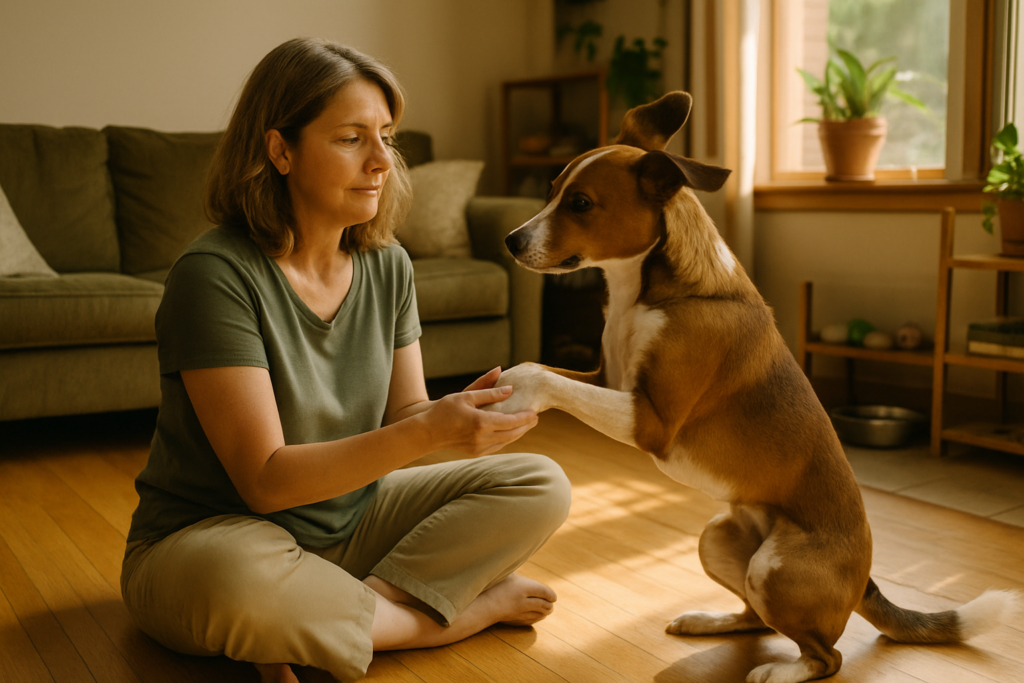
Every dog at Muttley Crew Rescue in Eufaula, Alabama (Barbour County) has arrived with a different origin story. Some came emaciated and fearful after months of neglect. Others landed in the program because their previous families faced home foreclosures, illness, or sudden upheaval. What binds them together isn’t their past – it’s their future. Rescue dog adoption isn’t sentiment masquerading as ethics; it’s a practical decision that saves a specific animal’s life while creating space in the rescue system for the next dog in crisis. If you’ve considered whether adopting a rescue dog actually makes sense for your family, the logic is clearer than most people expect.
The Economics of Rescue Dog Adoption vs. Breeding
When someone bypasses a rescue and goes directly to a breeder, they’re making a choice with consequences that extend far beyond their own front door. Muttley Crew Rescue, like shelters and rescue organizations across rural areas, operates with finite kennel space, food budgets, and volunteer hours. According to the Humane Society of the United States, approximately 3.2 million dogs enter shelters annually in the U.S., and in rural communities like Eufaula, that pressure is acute because infrastructure is already sparse.
Breeder puppies typically cost between $1,200 and $3,800, depending on pedigree and breeder reputation. You’re often getting an animal with zero behavioral history and unknown genetic health risks. No guarantee of ethical breeding practices comes with the purchase.
Meanwhile, Muttley Crew’s rescue adoption fee runs $100 to $400. That dog arrives already spayed or neutered, vaccinated, microchipped, and temperament-tested. Staff members spent weeks observing the dog’s personality in real-world scenarios.
Here’s where the comparison matters most: that adoption fee funds actual animal care. Veterinary surgery, daily food, shelter, medical treatment for neglect or injury, behavioral training – every dollar goes directly into a system designed to pull dogs out of crisis. In contrast, a breeder purchase funds breeding infrastructure instead. Rescue dog adoption funds rescue operations.
Why the Price Gap Matters
The lower cost isn’t a discount. It’s proof of where your money goes. A dog at Muttley Crew has already consumed hundreds of dollars in rescue resources before you meet them. That adoption fee doesn’t mark up a product; it asks you to cover your share of the dog’s actual care. Additionally, it frees up that rescue’s budget for the next arrival.
What Rescue Dogs Bring That Puppies Don’t
Something observable happens when you adopt a dog that’s experienced uncertainty. It’s not mystical.
Dogs don’t have language for gratitude, but they have behavior—and rescue dogs often exhibit an emotional responsiveness that catches adopters off guard. Many shelter dogs develop hyperawareness of their new owner’s mood. This near-constant attentiveness stems from having learned to read instability. A dog that spent four months in a kennel learns to track you between rooms. Similarly, one that someone abandoned learns to follow you into the kitchen, the bathroom, upstairs. A dog that knew hunger sleeps more deeply once it understands food is reliable.
These aren’t trained commands. Rather, they’re survival instincts metabolized into something that looks remarkably like devotion. The dog isn’t grateful in an abstract sense; the dog has learned that your presence predicts safety. That learning shapes behavior permanently.
At Muttley Crew Rescue, the dogs come from local circumstances. Rural surrenders, foreclosure situations, cases of abuse or neglect in the Eufaula area, strays picked up from surrounding communities – these dogs carry real local histories. Volunteers have lived with your dog for weeks or months, which means they know which dogs are food-motivated. They understand which ones were startled by loud noises in their previous situation. Furthermore, they know which dogs need a quiet first week before they’re ready to engage with a household. When you adopt locally, you’re not making an educated guess about temperament; you’re getting informed guidance from people who’ve already done the behavioral groundwork.
Rescue Dog Adoption Frees Resources for Crisis Situations
Every adoption from Muttley Crew Rescue creates a direct, measurable consequence: one kennel becomes available. One food budget slot opens. One dog’s medical care no longer draws from the rescue’s stretched resources.
In rural areas, this matters acutely. Eufaula and surrounding communities don’t have the shelter infrastructure of larger cities. No municipal animal control operates with multiple facilities here. No competing rescue organizations provide overlapping services. Muttley Crew Rescue operates in an environment where space constraints are real and immediate. When you adopt a dog, that rescue can pull another animal from a dangerous situation – an abused dog from a backyard, a stray from a roadside, a dog whose family can’t afford its care anymore.
This isn’t charity framing. It’s systemic. Your rescue dog adoption directly enables the next rescue, because the animal you take home creates physical and financial space for the next crisis intervention.
What to Expect When You Adopt
The transition period varies considerably. Some rescue dogs settle into a household within days; others need weeks to recognize that the environment is stable. The dog may test boundaries – not out of disobedience, but out of uncertainty about whether the rules will change tomorrow. For example, a dog that experienced chaotic housing may struggle with thunderstorms or car rides because those sensations previously triggered instability.
Muttley Crew Rescue staff will give you a specific behavioral profile. You’ll learn what this dog does well. You’ll discover what triggers anxiety. You’ll know whether it’s lived with children or other animals, and what its exercise needs actually are. These aren’t guesses – they’re observed facts from weeks of care. This information matters most during the first month because you’re not starting from zero.
Most rescue dogs from Muttley Crew adjust within 2 – 8 weeks. They learn the household rhythm and trust that food appears. They recognize that you return when you leave. Therefore, they understand that the same person handles them consistently. The behavioral quirks that seemed significant in the first two weeks often fade once the dog understands the environment is predictable.
The Larger Picture
Rescue dog adoption isn’t morally superior to other choices – but it is materially different. You’re adopting an animal with a real history. Simultaneously, you’re freeing a rescue organization to continue its work in a resource-limited community. You’re also paying a transparent fee that funds actual animal care rather than breeding cycles. In fact, when you adopt from Muttley Crew Rescue, you gain a dog that’s already been vetted, treated, and assessed.
You support an organization doing critical work in a community where animal welfare infrastructure is fragile. You make space for the next dog that needs to be pulled from a bad situation. That dog is already waiting.